Thursday, April 22, 2021

Blog Post #10

 Agenda Setting 

    Agenda setting is the “ability to influence the importance placed on the topics of the public. It is the manipulation of public awareness and concern of salient issues by the news media.” First introduced in 1972 by college professors, Maxwell McCombs and Donald Shaw, they found in surveying North Carolina voters during the 1968 U.S. presidential election that what people thought were the most important issues were what the mass media reported as the most critical. Thus, agenda-setting theory was born, built on the notion that the mass media sets the agenda for what people should care about.
News reports make it in a way that when a particular news report is given importance and attention than others, the audience will automatically perceive it as the most important news and information given to them. Agenda setting can be used in many different things including political ads, campaigns, business news, PR ( public relations), etc. There are three different kinds of agenda setting, the first one being public agenda setting which is when the public determines the agenda for which stories are considered important. The second kind is media agenda setting which is when the media determines the agenda for which stories are considered important. The third type is policy agenda setting which is when both the public and the media agendas influence the decisions of public policy makers. These different types make up all of the different types of news that we get as the audience.

    The conflicts that can come with agenda setting are that media users are not ideal- the people may not pay enough attention to the details, the effect is weakened for people who have already made up their minds about a topic, media cannot create problems, they can only alter the level of awareness, priorities, importance, etc, and it can be difficult to measure. Agenda setting can also effect society in many different ways that we wouldn't really think of. It has a powerful impact on what individuals think that other people are thinking, and hence tend to allocate more importance to issues that have been covered by mass media. Also, having your own opinion could be swayed without having much control over it from the societal values opposed to your own.


    The biggest concept that is related to agenda setting is gatekeeping. Gatekeeping is in charge of and has control of the selection of content discussed in the media. This is the process of when they choose the media that is shared with the public then the media that is shared is made to sway the opinions of the audience in the process of agenda setting. Editors are the main gatekeepers of the media itself and they decide what to share based off of its trustworthiness. It is is a powerful authority who ensure the right material is disseminated to mass. Because some issues are important to media but not to masses. Also they are much concern on not to distort peace and public stability. Agenda setting is the basis of how we get our information and news so it has become a big part in our society and most people don't know what it is. 


Monday, April 19, 2021

Blog Post #9

 Rogers' Diffusion of Innovations 

The Innovation of the Smart Phone 


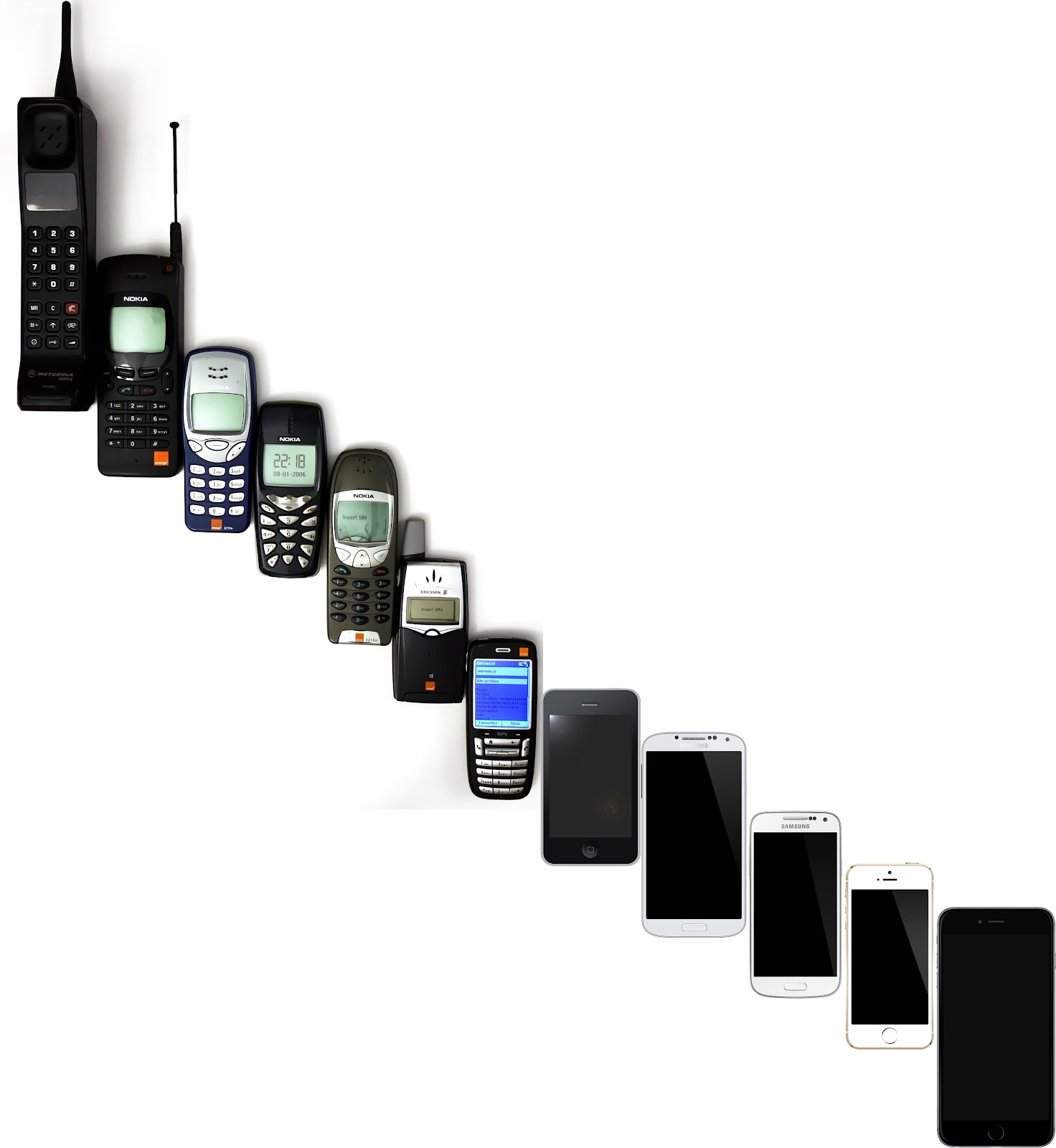
    The spread of the smart phone caught on because of its ability to do the job of a phone and some computer functions all in one device. The spread caught on because of multiple different factors including style and function, ability to take pictures, more screen, 5G, and artificial intelligence including things like Siri. The fact that this new phone could be fit into someones pocket and still be able to do so many different things made it very popular and easily accessible. 

    The early adopters are the people in our younger generation today who jump on all of the news trends and technologies. People jump on this kind of technology for the convenience of having new features and shortcuts to do the things that use everyday. Having the chance to do something fast or more efficient is very appealing to the new generation. 
    
    People who adopted this technology later see that the times of the world are changing and technology is taking over in a sense that we need smart phones in order to do most of the work we are tasked with. Corporations and businesses are beginning to require these different devices, for example a company smart phone. They may not have thought that they needed one at first but now they are being shown different way to use the smart phone in their different lines of work. 

    Most of the people who are laggards about the smart phone are in the older generation who are mostly retired or don't need a smart phone to do work. They don't use the smart phones mostly because they grew up in a time where the simple flip phone for making calls and sending a quick message was enough. They could also have a spouse or someone they live with has a smart phone so they don't see the need for them to also have one. 

    Some of the negatives about having a smart phone could include creating bad sleeping habits, cause car accidents, create more anxiety and depression from the constant comparing yourself to others, very distracting, and they are constant expense. For some people in the late adopters and laggard categories these factors could make them want to put off or not get a smart phone at all because they don't seem worth it but they have so many other things to offer people as well. The positives include instant communication with people making it easier to stay in touch with family and friends and making some jobs easier. It also includes a camera that can hold thousands of pictures to keep different memories locked away, the ability to surf the web and look something up fairly quickly, they have GPS systems for directions, and so many apps to help make daily tasks easier to complete (for example depositing a check on your phone instead of having to go all the way to the bank). I believe that smart phones have been a huge step in our future and help us more than we know and the ways that the smart phone can help us far out weighs the negatives if you set screen time boundaries and try not allow the phone to control your life. 


Thursday, April 15, 2021

Blog Post #8

 The Cassette Tape

    In all of the presentations I thought that all of the technology was very well explained and they all had some very interesting information attached to them, but the one that I found very interesting was the cassette tape. Carly Zimmerman explain the cassette tape to the class and had some fun facts along with the basic information. I've always been a big fan of music and video so this invention to lead up to what we have today was very important to me. 


    The cassette was invented in 1962 by the Phillips Company, released originally in Europe on a Berlin radio show. It was finally released in the United States in November of 1963. Videocassettes were available to the public in the 1970s and the cassettes specifically for film were a lot bigger in order to hold more data on them. The walkman boosted the success of the cassette tape in 1979 because it was the new and improved way to listen to music in a portable way. The life span of the tape on the inside of an audio tape could last any where from 10-30 years. They were able to create the first magazine on tape using cassette tapes which was another start to the audiobook. Sadly it peaked in the late 80s when it was surpassed by the CD in the 90s. You can still find them in today's society in court recordings and some recorded music but they are challenging to find. The cassette tape was an amazing invention that boosted the portable music and film industry, and along with many other inventions they will go down in history. 


Blog Post #7

 The Progressive Era: Antiwar Voices 


    I believe that these websites are hard to find these antiwar voices because they are speaking out against the government and what they are doing in terms of war and decisions that our government is making regarding relations with other countries and within our own country.  The fact that we have the first amendment and that the government can't necessarily silence the voices of these people, they try to hide these voices as much as possible making it hard to find websites that speak out against the war decisions of the leaders in our country. The people speak out against the war because war is putting the American people and our country in danger due to the fact that the rich people in power don't know how to solve conflicts in any other way other than violence. They are taking people from their families and friends to fight others for things that could be settled peacefully. The antiwar voices are being hidden and silenced in a way in order to show other countries that our country is a united front even though the people in charge only care about themselves.  These people were also against wars for the economic purposes and how the country was putting their money and resources into the wrong things, instead of helping better our country, they are putting more money into weapons. The country is in enough debt that more war is the lat thing that the US needs. The people in power know that these are all valid reasons to not have a war but they don't care so instead of listening to the American people they silence them and burry their feelings so that they can go on without protest and the spreading of these antiwar thoughts. 

Blog Post #6

The First Camera Phone 

 
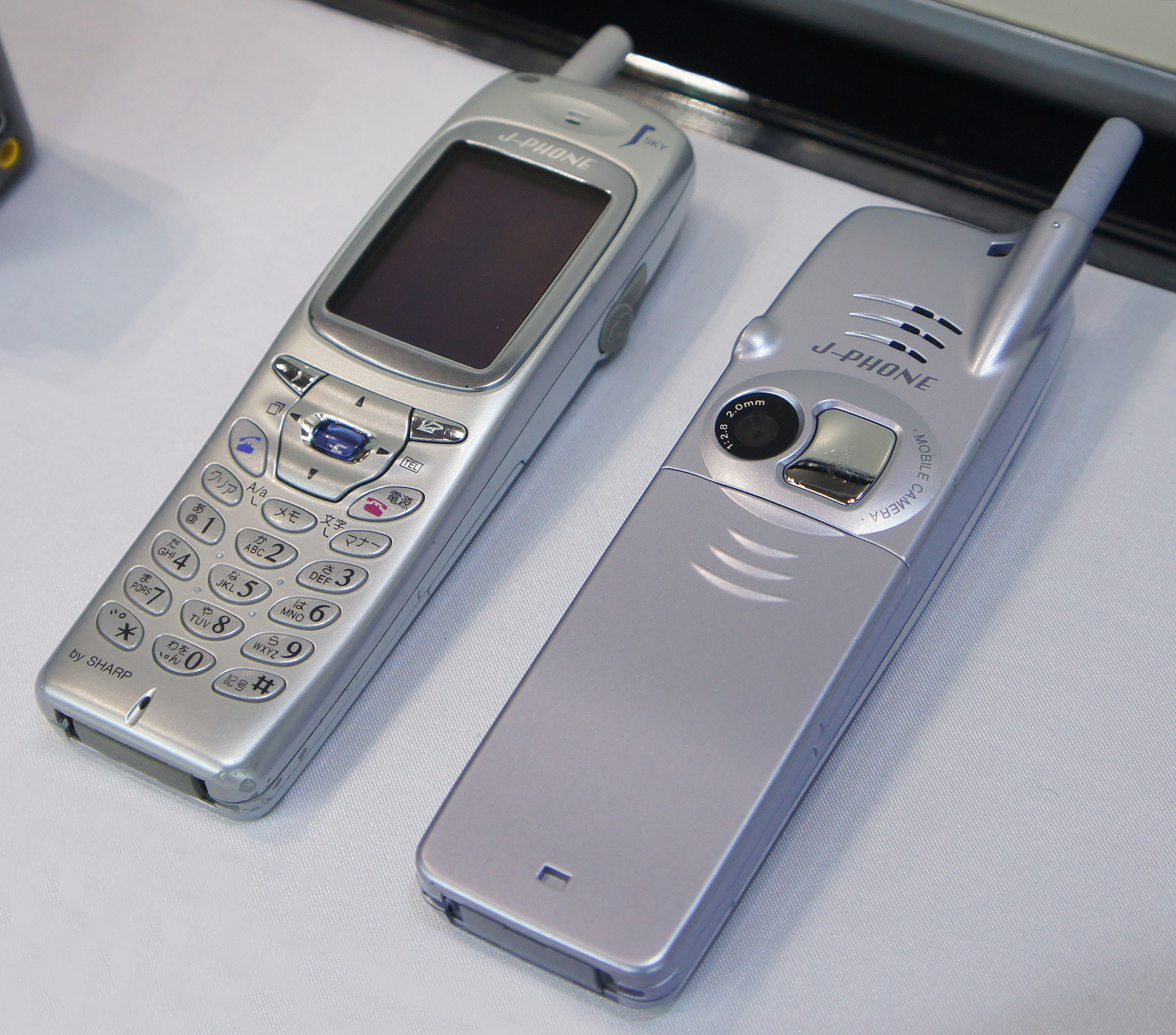
    The first camera phone was manufactured by Samsung and originally released in South Korea in 1999. It wasn't released, however, in the United States until November of 2002. The first model of this phone with the camera was worth $400, which is much different than the prices of phones today ranging up to $1000. The original model was able to hold up to about 20 pictures before they had to be downloaded to another device, most commonly to a computer. The picture quality was about 350000 pixels (about .35 mega- pixels) which was very good at the time but not so much to us now. In order to download the pictures to a computer you had to attach the phone to the computer with a cord and wireless download wasn't invented until 2004. In 2004 the camera quality of the evolutionary camera phone was getting better and was not only allowing wireless download and printing but the picture quality was good enough for the pictures to be printed without it being too grainy. Later in the evolution of this invention, the multi-shot camera was added to the phone giving it the ability to to take up to 8 pictures at one time, and brought the price up by about $150. Within the first year of the new camera phone about 80 million people had one of these camera phones worldwide. 


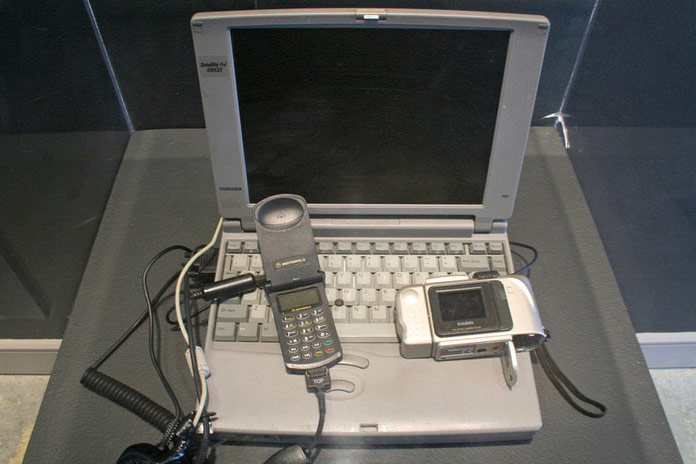
    The first camera phone idea was originally thought of by a man Philieppe Khan. He was sitting the maternity ward waiting for his wife to give birth and he wanted a way to take a picture of the birth and then send it to their friends and family. He made the camera using a computer, a regular camera, and his phone. When his daughter was born he was able to take the picture of her and then send it to 2000 different people. After he figured out how to do this, he took it South Korea where it was developed into the first camera phone. He had created something that changed our entire world of technology all because he wanted to take a picture of his new daughter and send it to his family. The phone today has gone through many changes since then and evolved into the iPhones and Samsung (or any other kind of phone) that we know today. 


    The first camera phones have a lot of pros and cons that stemmed from this newfound technology. Some of the pros are that it jump started the evolution of the smart phone and now all phones have a camera as a default to the design of any device. It made it a lot easier to take and share photos with people because it was all in one device and you didn't have to have a separate camera and computer to do that anymore. It was very easily accessible to the people. On the other hand there were some cons as well. One of them being that in 2006 camera phones surpassed the sales of digital and film cameras hurting the sales of those devices.  The camera quality in these phones were not the best at first but they have significantly gotten better over the years. It was also a problem for people who wanted to take a lot of photos because the storage on the phone and for the camera was very limited so people had to keep downloading them to another device which could be a hassle sometimes. Overall though the camera phone was a revolutionary upgrade from the first cell phone and brought us to the amazing technology that we have today. 


Wednesday, April 14, 2021

Blog Post #5

In the Age of AI 


    I thought that this documentary was very interesting in learning about AI and embrace the new tech that is coming in to the world. China is one of the most technologically advanced countries in the world. The President Xi Jinping says that China is going to catch up to the United States in artificial intelligence by 2025 and be past us by 2030. By feeding these programs mass amounts of data and if it has a specific goal then this technology could assess problems, make predictions, and  create a solution for that problem. Some of the things that really surprised me was them talking about how they think that this technology can help solve the problems in cancer diagnosis and other diseases to help people of all kinds. It is a more elaborate and creative computer mind that will be able to look and assess things in different ways. 


    The fears that the AI technology is bringing up in people is the problem of privacy. The AI technology requires a facial recognition system and it also has a reward and consequence system based off of "social credit" in order to create a complete surveillance country. Another thing is that they think it is going to split the countries between the China and American technology and create a technological Cold War. When it comes to technology this advanced, it is going to make people very competitive in who thinks of what first.  This documentary explains the good and the bad things about this technology and shows that the future of this world is going to something we have never seen before. 


Thursday, April 1, 2021

Blog Post #4

 First Amendment in our Lives Today 

Black Lives Matter Movement 


    The first amendment rights are scattered throughout this country and are practiced by many people everyday without them even knowing it. When posting on social media of your beach vacation or of a funny story a friend told you is exercising your first amendment rights by having freedom of speech. The first amendment has been a big part of our society recently and the one I am focusing on is the Black Lives Matter protests. There are 6 different rights/ clauses under the first amendment that include freedom from religion (establishment clause), freedom of religion (practice of the clause), freedom of speech, freedom of assembly, and freedom of petition. 
    
    The Black Lives Matter movement is an example in today's society of the American people practicing their first amendment by speaking their minds, assembling together, and protesting for the things that these people feel very strongly about. Being able to come together and spend their time chanting and bringing awareness to a problem that dates back to the beginnings of our country was needed to get people to listen. Freedom of assembly and protest were used by the public in all 50 states on this matter and have brought light to this topic to leaders of this country to have them make a change. According to statistics only 1 in 10 Americans know that freedom of assembly is a part of our first amendment rights and now it is being shown all around the country. These protests also bring up points from the 8 speech theories the theory to promote tolerance from all of the hate speech connected to this topic but how the world needs to be able to evolve and grow through the hate and become a better place for future generations. Bringing awareness to the tough topics today are the things that are needed in order to make that change happen and people are going to have a problem with this change but when this country gets through the storm it will become better. 


Final Blog Post

My Relationship with Technology      While it is sad to say, Generation Z is probably the last generation to know what life was like before ...